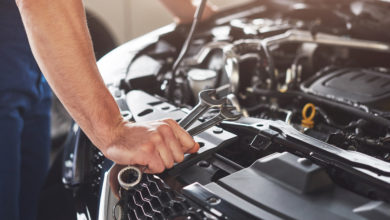
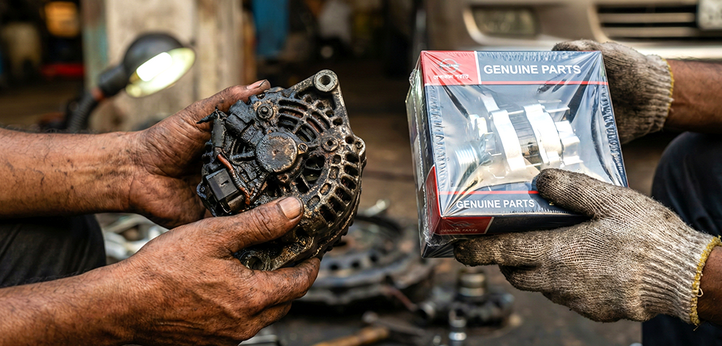
When you’re dealing with car troubles, it’s easy to feel overwhelmed. One of the biggest head-scratchers for any car owner is deciding whether to fix a worn-out part or just replace it entirely. It’s like standing at a crossroads, isn’t it? Do you patch up that leaky tire or invest in a brand-new one? This isn’t just about saving a few bucks; it’s about your safety on the road and your vehicle’s overall health.
Making the right call can save you money, time, and future headaches, while also ensuring your car runs smoothly and safely. We’re going to dive into the key factors to consider when facing this common dilemma, so you can make informed decisions with confidence. Let’s get you empowered to talk to your mechanic like a pro!
Decoding the Dilemma: When to Repair vs. Replace Vehicle Parts
Navigating car repairs can feel like a maze, but knowing when to repair versus replace vehicle parts is a crucial skill for any car owner. It’s not always a straightforward choice, but by considering a few key points, you can make smarter decisions for your vehicle and your wallet.
1. The Cost-Benefit Balancing Act
First things first, let’s talk about money. It’s often tempting to opt for the cheaper repair, and sometimes that’s the smart move. For minor issues like a small crack in a non-critical plastic trim piece, a repair might be perfectly sufficient and far more cost-effective than a full replacement.
However, don’t fall into the trap of “false economy.” If a repair is only a temporary fix that’ll likely fail again soon, you’ll end up paying for the repair and the eventual replacement. Always weigh the upfront cost of repair against the long-term value and durability of a new part. Sometimes, paying a bit more for a quality replacement actually saves you money in the long run.
2. Prioritize Safety: Critical Components First
When it comes to your car’s safety, there’s absolutely no room for compromise. Components such as brake pads, rotors, steering components, and suspension parts are vital to your car’s safe operation. If these critical vehicle parts are significantly damaged or severely worn, repairing them might not fully restore their original safety functionality.
Imagine trying to repair a badly warped brake rotor – it just won’t perform as reliably as a brand new one. In these cases, replacing the part is almost always the smarter, safer choice. Your life and the lives of others on the road literally depend on these components working perfectly.
3. Consider Your Vehicle’s Age and Value
Think about how old your car is and what its current market value is. If you’re driving an older vehicle with high mileage that’s nearing the end of its life, investing in expensive new parts might not make financial sense. A major component replacement, such as a transmission or engine, could cost more than the car is worth.
On the flip side, if you have a newer, high-value car, it’s usually worth replacing a faulty part with an OEM (Original Equipment Manufacturer) or high-quality aftermarket part to maintain its integrity, performance, and resale value. This decision is about balancing the investment with your car’s remaining lifespan and value.
4. Assess the Extent of Damage and Wear
Take a good look at the part in question, or have your mechanic give you a detailed assessment. Is it a minor crack, or is the part completely fractured? Is it just surface rust, or is the corrosion structural? Some parts, like a cracked bumper cover, can often be repaired effectively, especially if the damage is cosmetic.
However, if an engine component has suffered catastrophic failure or a body panel is extensively crumpled, a full replacement is usually the only viable option. Severe wear and tear, especially on moving parts, often means a repair would only be a temporary band-aid.
5. Longevity and Warranty: Peace of Mind
New parts often come with a manufacturer’s warranty, offering you peace of mind that the part is covered for a certain period or mileage. This can be a significant advantage, especially for expensive components. Repaired parts, on the other hand, rarely carry the same warranty, and the repair itself might not last as long as a brand-new part.
When you replace vehicle parts, you’re often investing in a fresh start, which can contribute to your car’s overall longevity and reliability.
Repair vs. Replace: A Quick Comparison
| Factor | Repair | Replace |
|---|---|---|
| Initial Cost | Generally lower | Often higher |
| Longevity | Potentially shorter, depends on repair | Generally longer, fresh start |
| Safety | May be compromised for critical parts | High assurance for critical parts |
| Warranty | Limited or none | Often includes manufacturer’s warranty |
| Time | Can be quicker for minor fixes | May involve ordering and waiting for parts |
| Complexity | Can be complex for specialized repairs | Often includes the manufacturer’s warranty |
Ultimately, deciding when to replace vehicle parts rather than repair them isn’t about finding a one-size-fits-all answer. It’s about weighing multiple factors: cost, safety, your car’s age, and the extent of the damage. By considering these points, you’ll be able to make informed choices that are best for your car’s performance, your safety, and your budget. Don’t hesitate to have an honest conversation with your trusted mechanic – they’re there to help you navigate these important decisions.