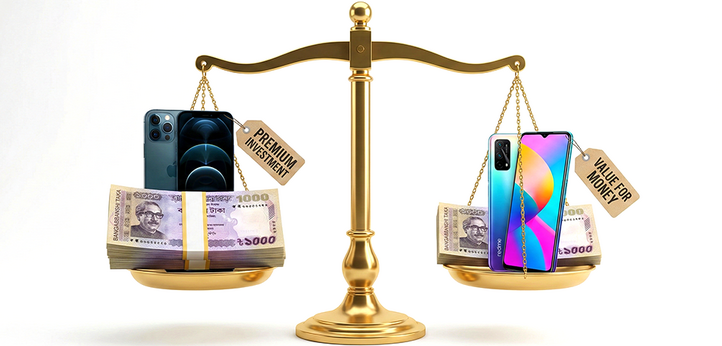
Picking a new smartphone can feel a bit like choosing a meal at a five-star restaurant while also eyeing the local diner’s menu. On the one hand, you’ve got those dazzling flagship phones promising the moon and stars, and on the other, super-affordable budget options that look perfectly capable. It’s enough to make anyone’s head spin! But here’s the truth: what’s “best” isn’t about the price tag; it’s about your needs, your habits, and your wallet. We’re going to break down the real differences between a budget smartphone and a high-end flagship phone, helping you understand who truly benefits from each, so you can make a smart choice without any regrets.
Decoding Your Smartphone Needs: Tips & Discussion
Let’s be real, both budget and flagship phones can make calls, send texts, and browse the internet. But the experience and what they can really do vary widely. Here’s a look at some key areas:
1. Performance & Speed: Are You a Power User or a Casual Scroller?
Flagship phones are packed with the latest, most powerful processors and often more RAM. This means they’ll handle demanding tasks like intensive 3D gaming, video editing on the go, or juggling a dozen apps simultaneously without breaking a sweat. If you’re someone who pushes your phone to its limits, constantly multitasking, or needs lightning-fast responsiveness for work or play, a flagship phone’s raw power is genuinely beneficial.
However, for most of us who mainly scroll social media, stream videos, email, and do some light gaming, modern budget smartphones are incredibly capable. They might not open apps in a millisecond, but they’ll perform everyday tasks smoothly enough that you probably won’t notice a significant difference in normal usage. Don’t pay for horsepower you won’t use!
2. Camera Quality: Casual Snapper or Budding Photographer?
This is often where flagship phones truly shine. They feature advanced multi-lens systems, larger sensors, sophisticated image processing, and specialized modes for low-light photography, ultra-wide shots, and incredible zoom capabilities. If snapping professional-looking photos and videos is a high priority, perhaps for social media, a hobby, or work, a flagship phone offers an unparalleled experience. You’ll notice the difference in detail, color accuracy, and performance in tricky lighting.
But wait, budget phones have come a long way! Many now offer decent main cameras, often with multiple lenses for wide-angle or macro shots. They’re perfectly adequate for everyday photos, capturing memories, and quick shares with friends and family. You might miss some advanced features or struggle a bit more in low light, but for casual photography, they definitely get the job done.
3. Battery Life: All-Day Power or Quick Top-Ups?
You might think flagships always have the best battery life, but it’s not always the case! High-end phones often have powerful processors and vibrant, high-refresh-rate displays that consume a lot of energy. While they usually compensate with larger batteries and incredibly fast charging speeds (both wired and often wireless), you might still find yourself needing to top up by evening if you’re a heavy user.
Budget phones, on the other hand, often feature more power-efficient processors and lower-resolution screens, which can result in excellent battery longevity. Many budget models are designed to last a full day, or even two, on a single charge. If all-day battery life without constantly thinking about a charger is your priority, some budget options might surprise you.
4. Build Quality & Extra Features: Premium Feel vs. Practicality
Flagship devices often boast premium materials, such as glass backs and metal frames, and advanced durability features, including IP68 water- and dust-resistance. They also pack in “nice-to-have” features like wireless charging, reverse wireless charging, in-display fingerprint sensors, and superior haptic feedback. These add to the overall user experience and give the phone a luxurious feel.
Budget phones typically opt for plastic builds, which aren’t necessarily bad – they can be more durable against drops and are lighter! While they might skip features like waterproofing or wireless charging, they still offer essential functionalities and often keep traditional headphone jacks or expandable storage options that flagships sometimes ditch. It’s about practical functionality over premium aesthetics.
5. Longevity & Software Updates: Future-Proofing Your Investment
Flagship phones generally receive more extended software support, meaning several years of Android or iOS updates and regular security patches. This ensures your phone stays secure, gets new features, and performs optimally for longer, potentially giving it better resale value down the line. It’s a longer-term investment.
Budget phones, while improving, often receive fewer major software updates and for a shorter duration. This isn’t a deal-breaker for everyone, but it means your phone might not feel as “new” or as secure after a couple of years as a flagship.
Budget vs. Flagship At a Glance
| Feature | Budget Smartphone (e.g., $150-$400) | Flagship Smartphone (e.g., $700-$1200+) |
|---|---|---|
| Price | Highly affordable, great value | Premium price, cutting-edge tech |
| Performance | Smooth for everyday tasks, light gaming | Blazing fast, handles anything, excellent for gaming |
| Camera | Good for casual photos, decent lighting | Exceptional, professional-grade, great in low light |
| Battery Life | Often excellent due to efficient components | Good, but high-power components can drain faster; fast charging |
| Build Quality | Durable plastics, practical design | Premium glass/metal, water resistance, refined feel |
| Extra Features | Essentials, headphone jack, expandable storage | Wireless charging, advanced sensors, haptics, unique features |
| Software Updates | Fewer major updates, shorter support window | Extended support, more frequent security patches |
It’s All About You!
Ultimately, deciding between a budget and a flagship smartphone comes down to what you truly value and how you use your phone. If you’re a casual user who needs reliability for communication, social media, and basic apps and appreciates value, a budget smartphone is an incredibly smart choice. You’ll save a significant amount of money and likely be perfectly happy with its performance.
However, if you’re a power user, a mobile photographer, a serious gamer, or someone who simply loves having the latest tech, premium features, and the best possible performance, then a flagship smartphone is worth the investment. It offers a superior experience in specific areas that truly matter to you. Don’t get caught up in the hype; think about your real-world use cases, and you’ll find the perfect phone waiting!